Brace Yourself, Winter is Running
10/14/26 • 7 minute read
It’s October, and the days are starting to get shorter. The sun is going down a little earlier every evening, and the mornings are just starting to get dark. It isn’t cold yet, not really. A long sleeve is plenty. But before you know it, it’ll be dark when you leave the house in the morning and dark when you get home, and if you’ve run through a few winters you know how fast it goes from “a little crisp” to ice on the sidewalk.
The good news is that now is the time to get set up, before you need it. A couple years back I put together a list of safety gear for winter running. Most of it still holds up, but some of it has been replaced and I’ve picked up a few new things since. So here’s the updated list: what I’d buy this year, in the order I’d buy it.
Be Seen: Headlamp, Vest, and Blinkers
You can’t run safe in the dark if you can’t see and nobody can see you. That’s three problems, so you need three things.
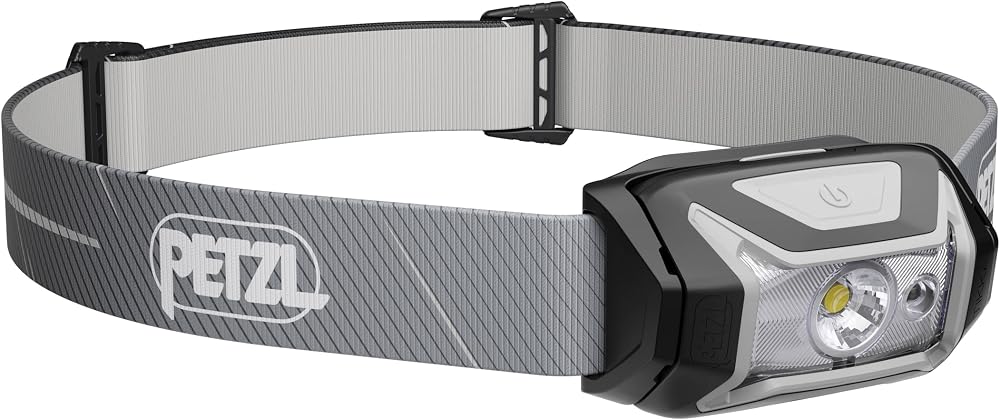
The headlamp. I’m sticking with Petzl. The one I’d get now is the Petzl Tikka CORE. It puts out 450 lumens, weighs 84 grams, and comes with the rechargeable battery, so you aren’t digging around for AAAs at 5am. It has a red mode too, which is handy for not blinding the one other guy out there. If you want to save some money, the regular Tikka is 350 lumens and takes AAAs. Running in the woods or on dark trails with no streetlights? Step up to the Actik Core, which gives you a flood beam and a mixed beam so you can throw light farther down the trail.
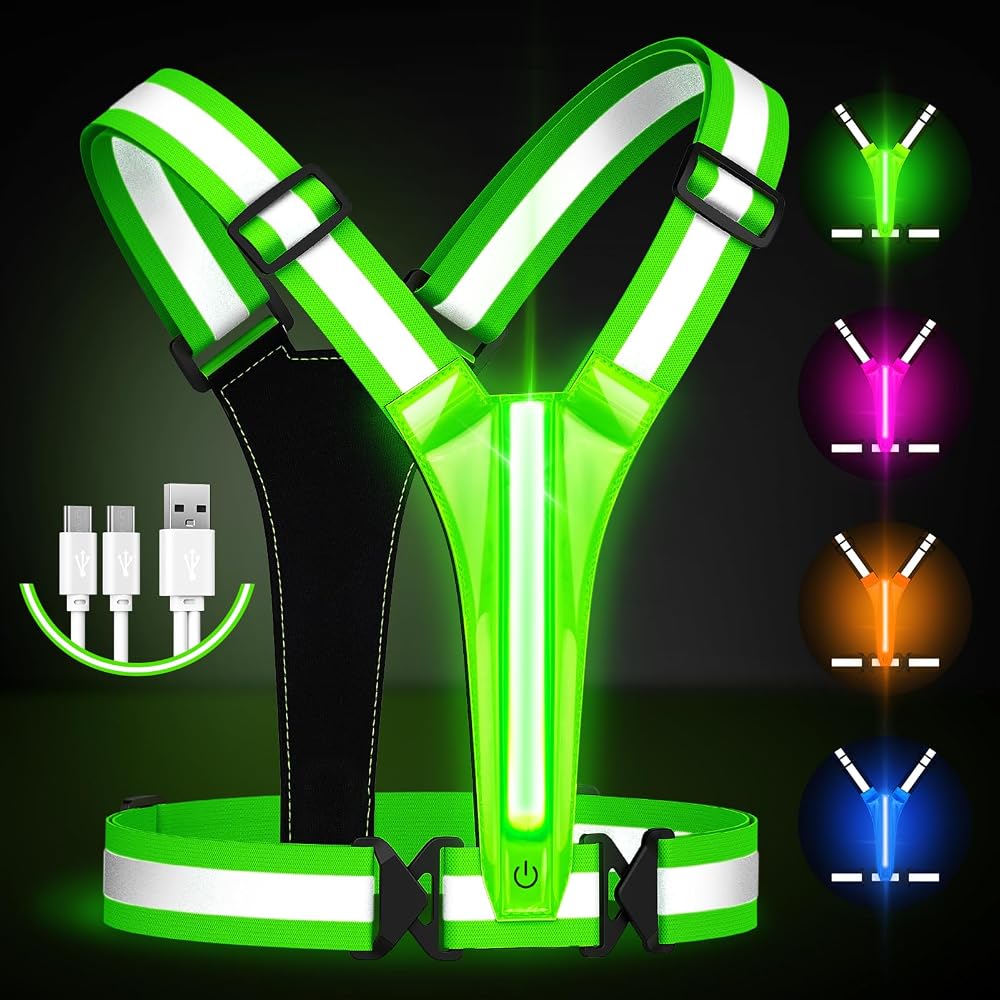
The vest. Yes, it looks goofy. No, I don’t care. Cars don’t see you until they’re on you, and a vest with lights on it fixes that. The Fokia Kunbio LED vest is about twelve bucks, USB rechargeable, and visible from about 1,000 feet. It’s light enough that you forget it’s there. If you want to go nuts, the noxgear Tracer2 is the fancy version, with fiber optic cables that light you up from every angle. It’s pricey, but people tend to love theirs.
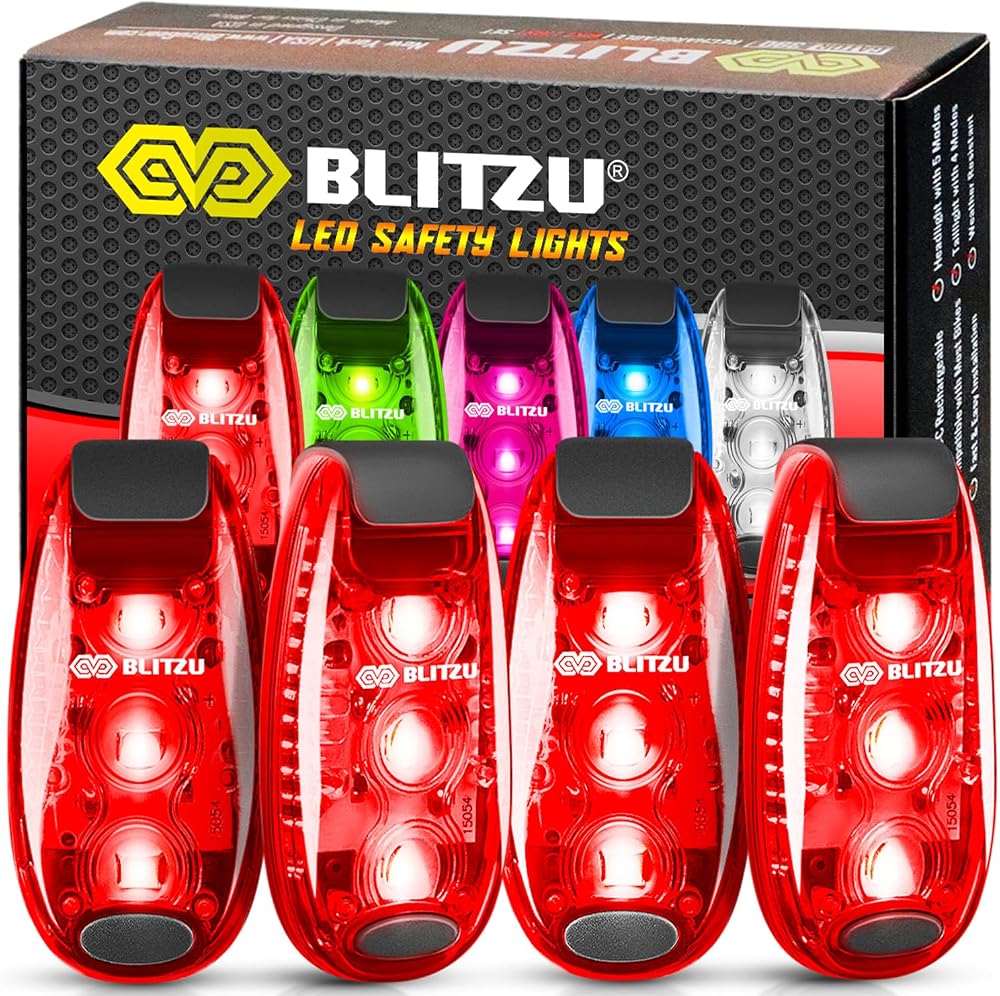
The blinkers. This is the new one on the list. A 4-pack of BLITZU clip-on safety lights costs about twenty bucks. Clip one on the back of your waistband, one on your hat, one on each arm if you want. They have steady, flash and strobe modes and a button battery that lasts forever. They’re also cheap enough that you can leave a couple in your running jacket and never think about it again.
Don’t Slip: Two Levels of Traction
Last time I only recommended one traction device. I’ve since learned that one is not enough, because winter is more than one thing.
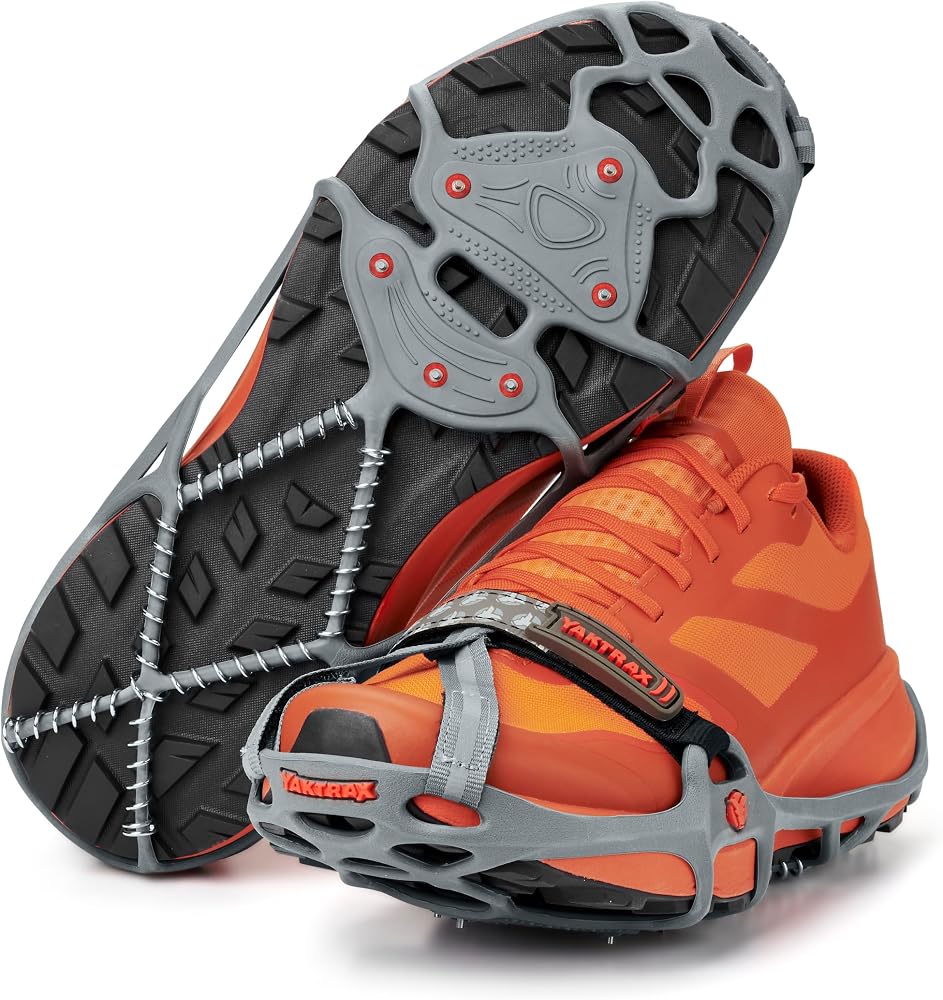
For mixed roads, meaning some pavement, some slush, a few icy patches, the Yaktrax Run is still my pick. Carbide spikes in the forefoot plus steel coils give you grip without feeling like you’re running on nails, and they’re easy to pull off when the road clears up. Check the sizing: bulkier shoes might need to go up a size.
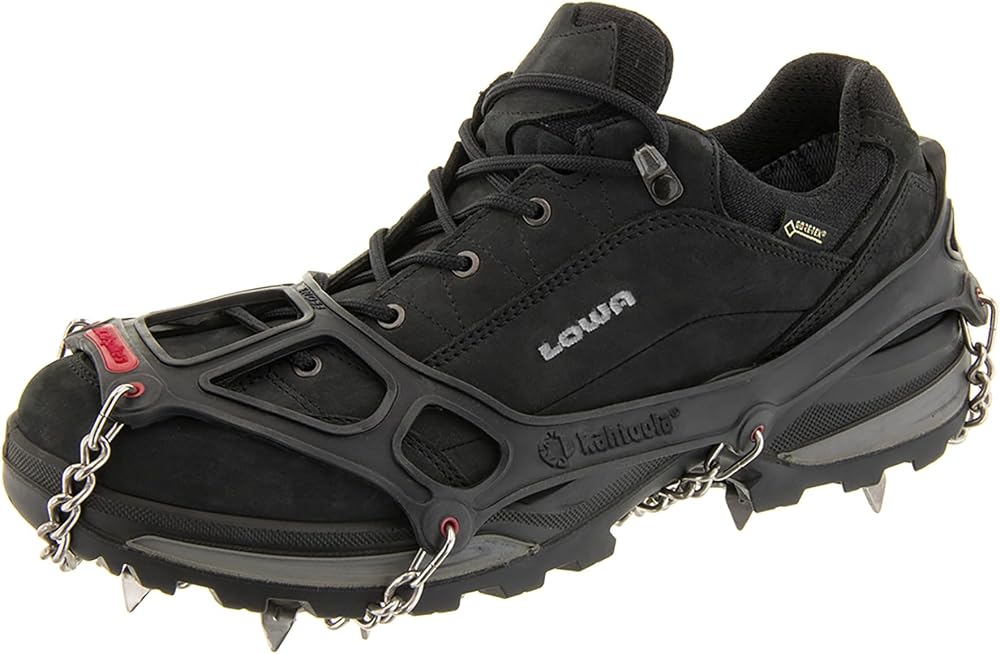
When it’s properly icy, or you’re on packed snow trails, the Yaktrax aren’t enough. That’s where Kahtoola MICROspikes come in. Twelve stainless steel spikes per foot, a tough elastomer harness, and they pack down small enough to throw in a pack. They aren’t cheap at around $90, but they’re the difference between running and carefully shuffling down your own driveway. I’d say it’s worth it if you trail run at all in winter.
Keep Your Feet Dry: Shoes and Socks
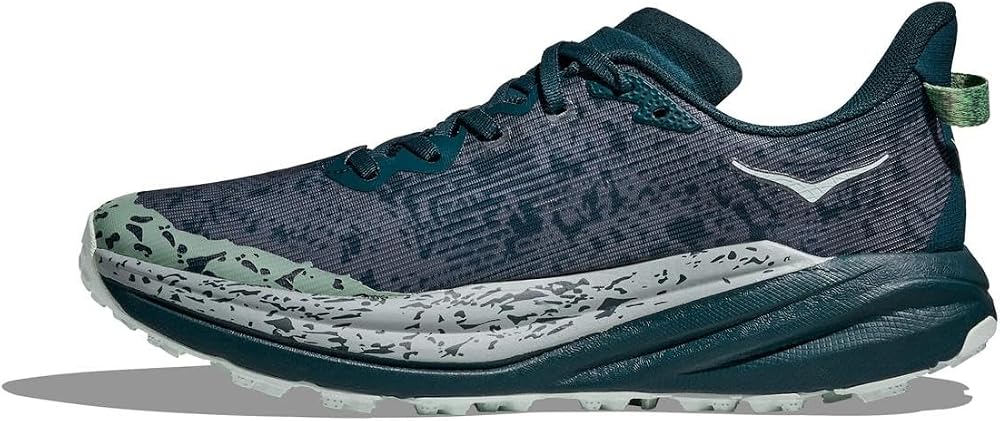
My shoe pick hasn’t changed: a trail shoe with Gore-Tex. I still use the HOKA Speedgoat, and the current version is the Speedgoat 6 GTX. Gore-Tex keeps the slush out and the Vibram outsole grips on snow. A heads up: the version Amazon lists is the Mid, so it’s a little higher around the ankle. That’s not a bad thing when you’re running through a few inches of snow.
There are plenty of other good ones. Any of these will do the job:
- Nike Pegasus Trail GTX (men, women)
- Altra Olympus Mid GTX (men, women)
- ASICS GT-2000 GTX (men, women)
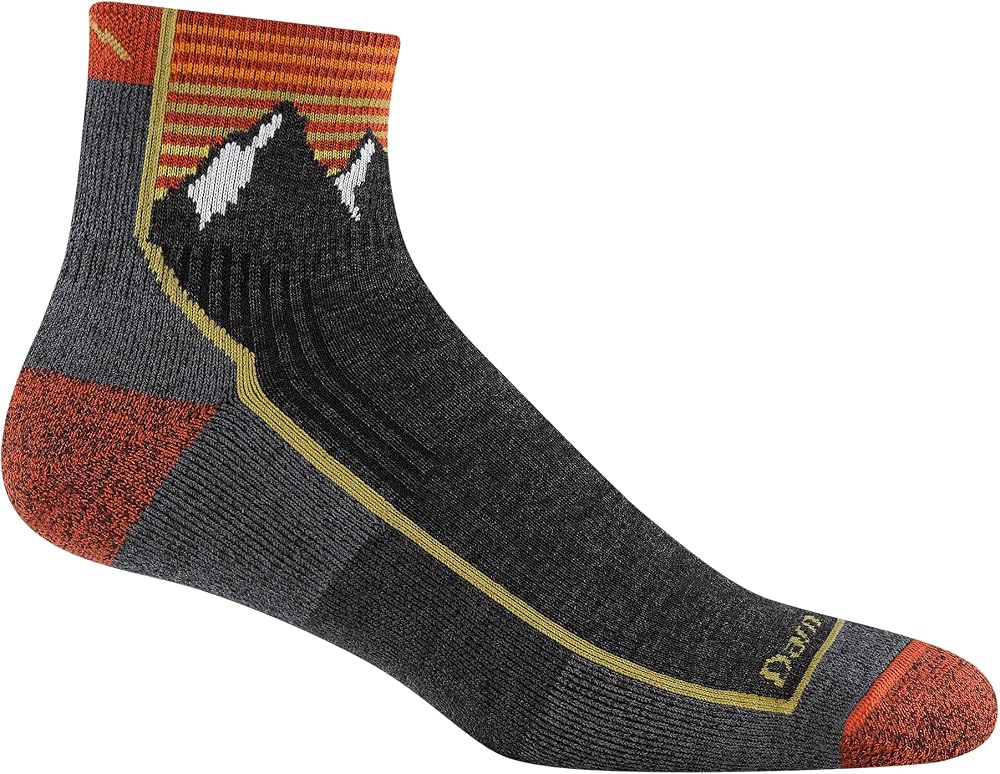
And socks. I used to ignore socks and I regret it. A waterproof shoe with a cotton sock is a bad time, because cotton gets wet and stays wet. Merino doesn’t. Darn Tough makes the pair I wear: they’re warm when wet, don’t stink after a week, and have a lifetime guarantee, which is a thing I’ve actually used.
Dress for It: Base Layer, Gloves, Neck
I said I’d do clothing in another post. This is the short version, three things that make the biggest difference.
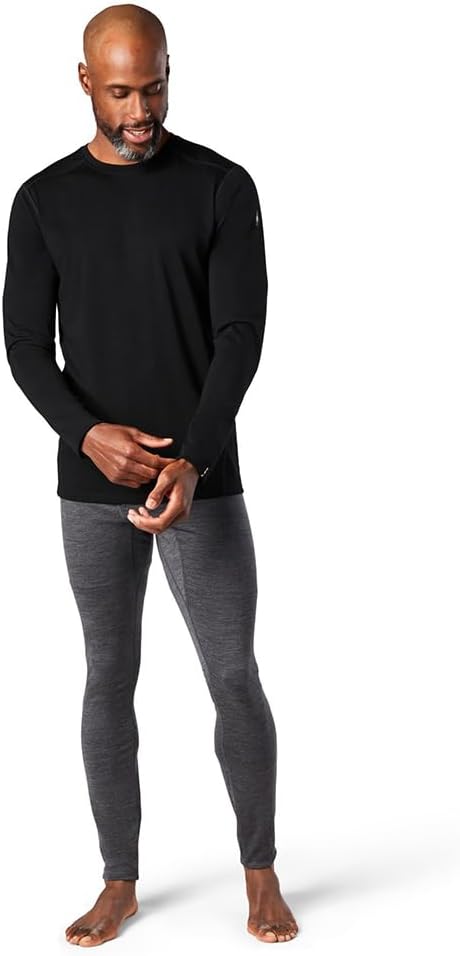
Base layer. Merino again. The SmartWool Classic All-Season Merino Base Layer isn’t cheap at $100, but it handles sweat well and I wear it all the way down into the teens. Put a wind shell over it and you’re done. It also works for ski days if you ever want to pretend you’re not a runner.
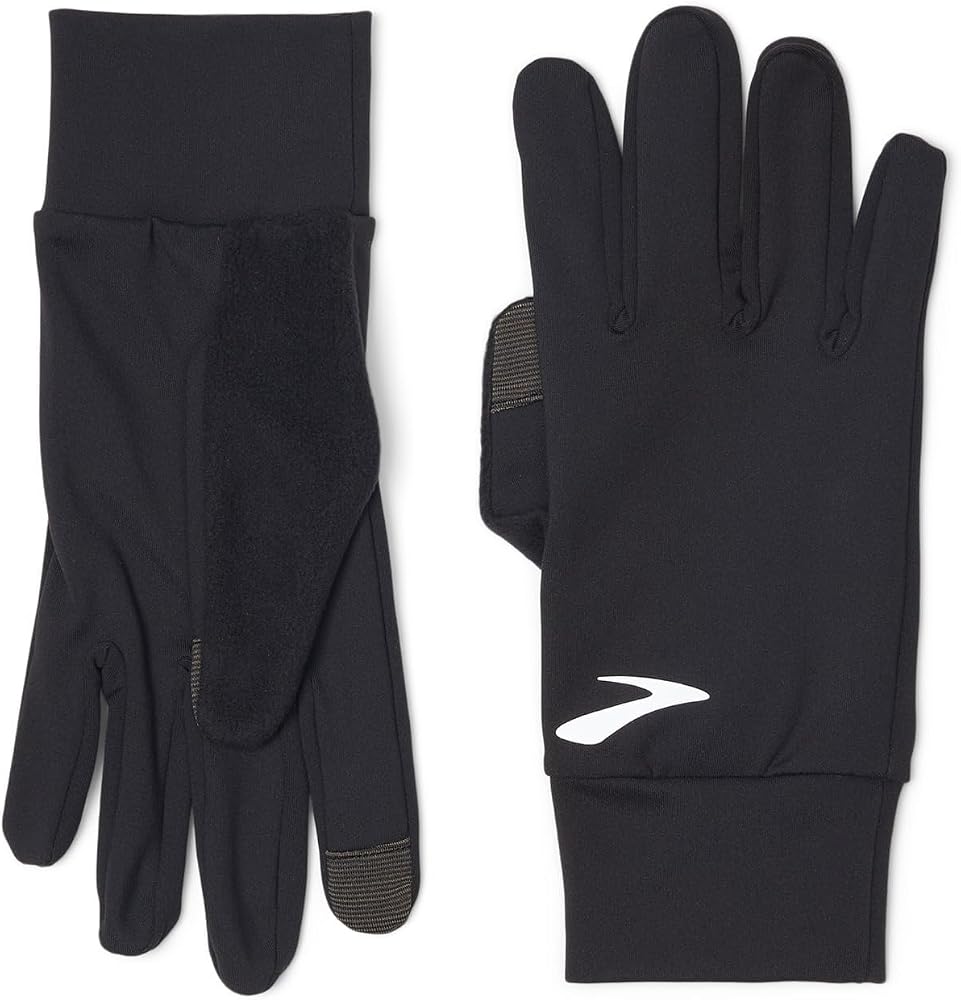
Gloves. Hands are the first thing to go. I like the Brooks Fusion Midweight Glove: warm, not bulky, and you can still use your phone without taking them off. It’s $25. If your hands run really cold, get a pair of mittens and wear thin liners underneath.
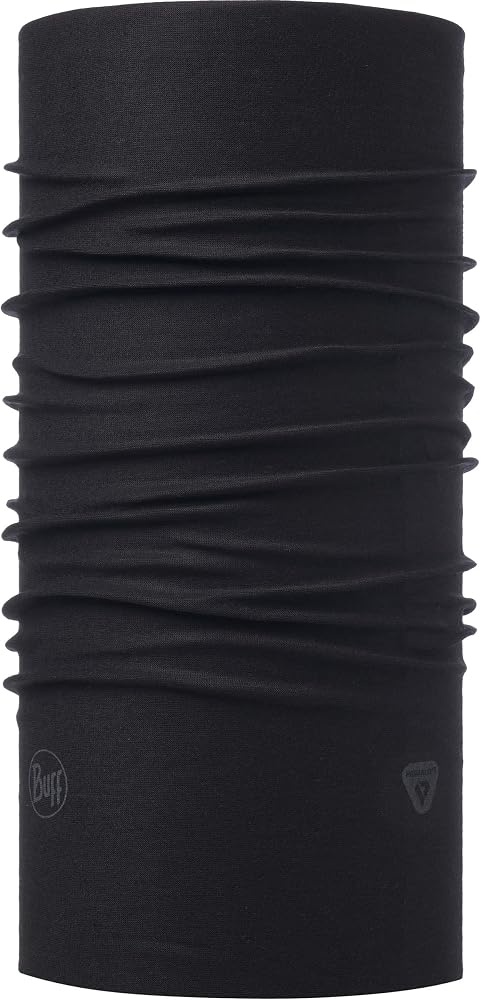
Neck gaiter. A Buff ThermoNet is thirty bucks and does about four jobs. Pull it up over your face when it’s brutal, down around your neck when it’s not, or over your ears when you forgot a hat. When I’m running and I get hot, it goes in a pocket and weighs nothing.
Brace Yourself and Keep Running
You don’t need all of this on day one. If I had to pick: headlamp, vest, and traction. That’s the safety stuff, and it’s what keeps you from getting hit or breaking something. Then add warm stuff as you figure out what you actually need.
Winter running is a good time. The roads are empty, the air is clean, and you get to feel smug about it for the rest of the day. Get the gear and get out there.
*