From Strychnine to Hydrogel: How Marathoners Learned to Eat
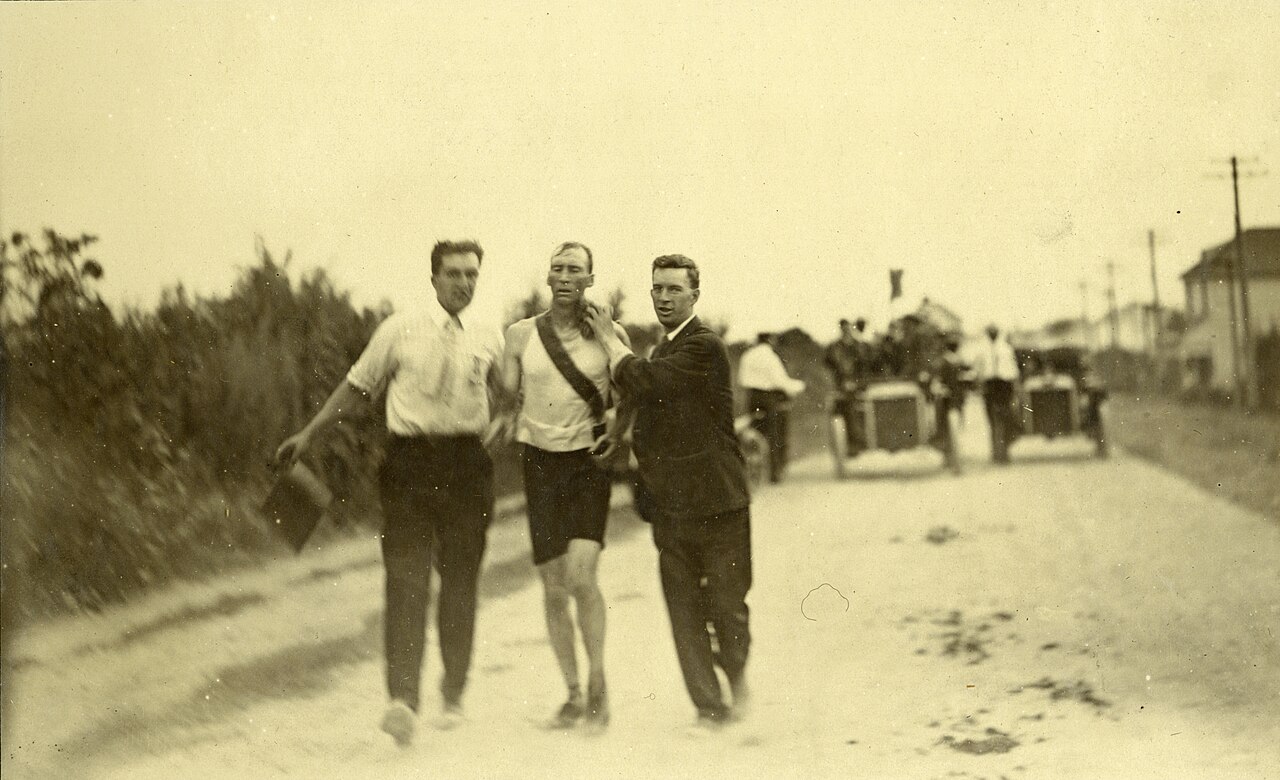
The date was August 30, 1904. Theodore Roosevelt was in the White House, the Olympics had been bolted onto the side of the World’s Fair in St. Louis like an afterthought, and at 3:00 in the afternoon, 32 men lined up to run a marathon in about 90 degree heat.
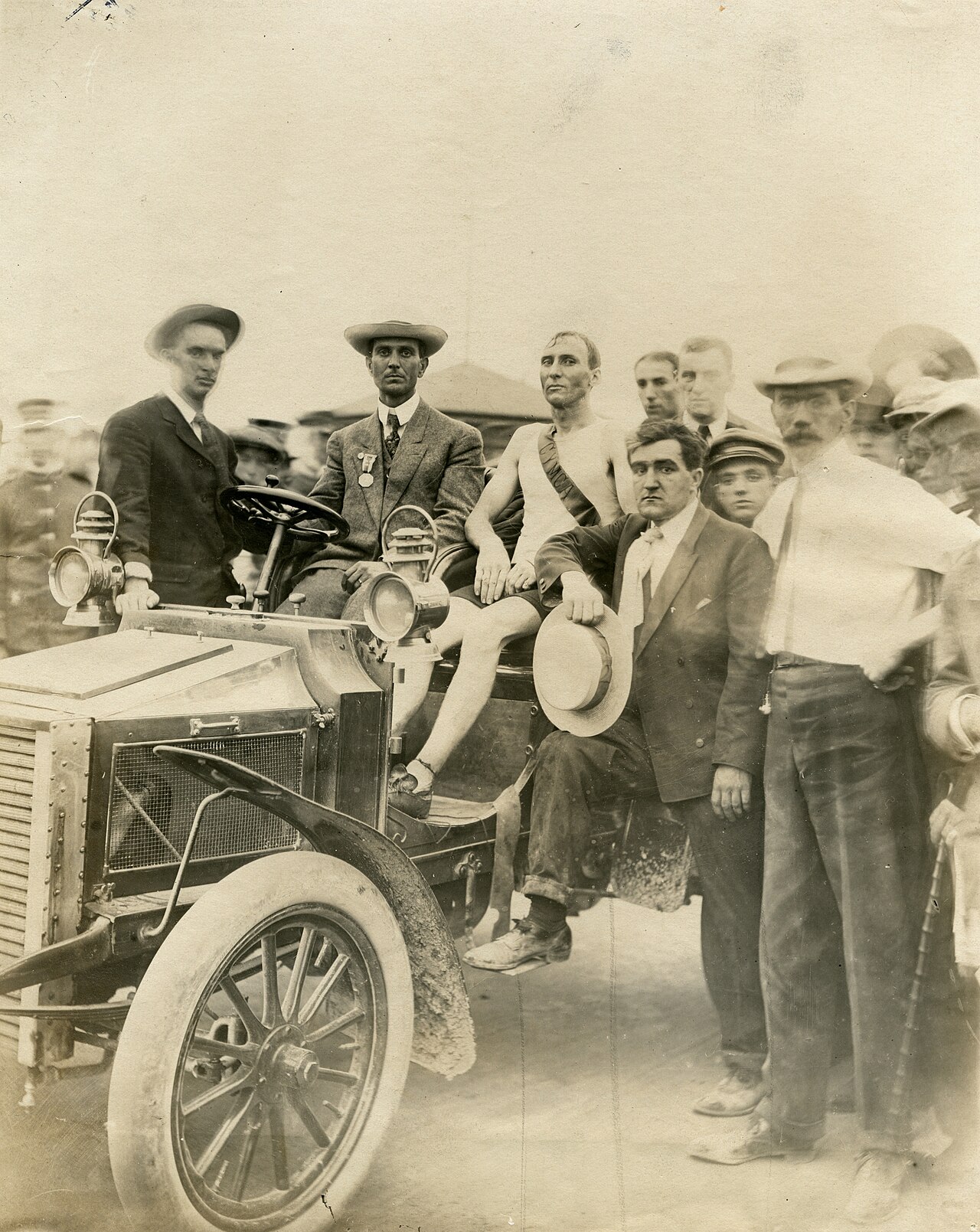
The eventual winner, an American named Thomas Hicks, was leading with ten miles to go when he started to fall apart. He begged his handlers for water and, by several accounts, got a sponge of warm distilled water to wet his mouth. Around mile 17 they gave him about a milligram of strychnine, the rat poison, with an egg white. Three miles later he got more strychnine, two more egg whites and a slug of brandy. His handlers pretty much carried him over the line in 3:28:53, still the slowest winning time in Olympic history. (For the record, the runner who got the first wreath that day, Fred Lorz, had ridden part of the way in a car.)
Around mile 17 they gave him about a milligram of strychnine, the rat poison, with an egg white.
We’ve learned a lot about nutrition since that race. In this post we’ll go through the history of how runners figured out what to eat and drink, from rat poison to engineered hydrogels. It took longer than you’d think, and I lived through part of it.
When I Started Running Long
When I started running longer distances, about 20 years ago, taking in nutrition during a run really wasn’t a thing. You ran, and you finished, and then you ate. Maybe you carried a gel for the end of a marathon just in case, but the idea of fueling steadily through a race wasn’t something most of the runners I knew did.
The thinking at the time, as I remember it, was that the smart move was to train your body to burn fat. There was a logic to it. Your body stores only a limited amount of carbohydrate as glycogen, enough for roughly a couple of hours of hard running, and when it runs out you hit the wall. But even a skinny runner carries tens of thousands of calories of fat. So if you could teach your body to burn more fat and less glycogen, the wall would move back, or disappear. The recipe was long, slow runs on an empty stomach, and a lot of running by feel with as little food as possible.
It made sense. And it turns out that part of it is true, which is what makes it such a good trap.
Does Fat Adaptation Work?
You can absolutely train your body to burn more fat. The most careful test of the idea in elite athletes came from an Australian researcher named Louise Burke, who put elite race walkers on a very low carbohydrate, high fat diet for several weeks during hard training. Their fat burning went up, as promised. But so did the oxygen cost of moving at race speed, meaning they got less efficient. In the first study, published in 2017, the low-carb group didn’t get the benefit from their training that the carbohydrate group did. A repeat of the study in 2020 found the same thing, with the low-carb walkers about 2.3% slower over 10,000 meters.
A couple of caveats. Those were race walkers, not marathoners, and the studies lasted a few weeks. I haven’t found anything that shows fat adaptation helps over a marathon, and for something like a 100-miler where the pace is a lot slower, it might be a different story. The more recent advice from sports scientists is more nuanced than “carbs good, fat bad.” It’s roughly to take plenty of carbohydrate in around hard sessions and races, and that it’s fine to run some easy runs with less.
So for the marathon, the advice I followed back then was probably backwards. I don’t think it cost me everything, but I do think it kept a lot of us from trying something that now seems obvious.
How We Got Here
If you’re wondering why it took until the 2000s to figure this out, the history is a bit embarrassing. For most of the 20th century, runners sipped cognac, wine or whatever somebody handed them out of a car. Through the 1960s the standard approach was to eat whatever was lying around, like orange slices, salt and flat soda, and to treat drinking water as a distraction or a sign of weakness. A common belief was that fluids would slow you down.
In 1965, a team of University of Florida researchers led by Dr. Robert Cade developed a drink to help the school’s football players, the Gators, deal with playing in brutal heat. They named it Gatorade. By the mid-1970s, drinking during a long run had started to become normal.
The next step came from a Canadian marathoner named Brian Maxwell, who had a bad race in 1983 and blamed it on low blood sugar. He and a Berkeley nutrition student named Jennifer Biddulph, who he later married, started testing recipes in a kitchen. They founded PowerBar in 1986, and by the end of the decade it was a household name. They sold the company to Nestlé in 2000.
The gel came in the early 1990s. A Berkeley biochemist named Bill Vaughan, according to the company, made the first GU in his kitchen, partly because his daughter Laura, an ultrarunner, kept having stomach problems during races. A bar had to be chewed. A gel could be squeezed into your mouth without breaking stride.
The Science Catches Up
By then the question was how much to eat, and the number most nutritionists repeated was about 60 grams of carbohydrate an hour. Here’s the plain English version of why that was a ceiling, and how it got broken.
Your gut absorbs glucose through one kind of doorway, and that doorway gets full at about 60 grams an hour. Eat more glucose than that and the rest just sits in your stomach, causing trouble. But fructose uses a different doorway. So if you eat a mix of both, you can get more energy through the gut at once.
Researchers including Asker Jeukendrup and Roy Jentjens showed in the 2000s that mixed carbohydrate drinks got more fuel into the muscles than glucose alone. Reported oxidation rates rose from about 1 gram a minute to something like 1.75. The common recommendation for events over about two and a half hours became around 90 grams an hour of a roughly 2:1 glucose to fructose mix.
One thing I liked is that Jeukendrup has been open about where the 90 number came from. He has said it was picked largely because it was a safe amount that few people had stomach trouble with, not because it was the physiological ceiling. It was a practical number, and it’s not magic.
The Modern Era
The latest wrinkle is a Swedish company called Maurten, founded in 2015 in Gothenburg. Its products use a hydrogel, which is a fancy way of saying that when the drink hits the acid in your stomach it turns into a gel that holds the carbohydrates in a sort of packet, which is supposed to be easier on the gut. Whether that matters as much as the marketing says is still something researchers are arguing about, and a lot of the studies in this area are funded by companies that sell the products, so keep that in mind.
Maurten got a big public moment on May 6, 2017, when it supported Nike’s sub-two-hour attempt that I wrote about in the supershoe post. Eliud Kipchoge drank it on his way around the Monza track, and he has been associated with it since. The shoes got most of the attention, but fuel was the other half of that project.
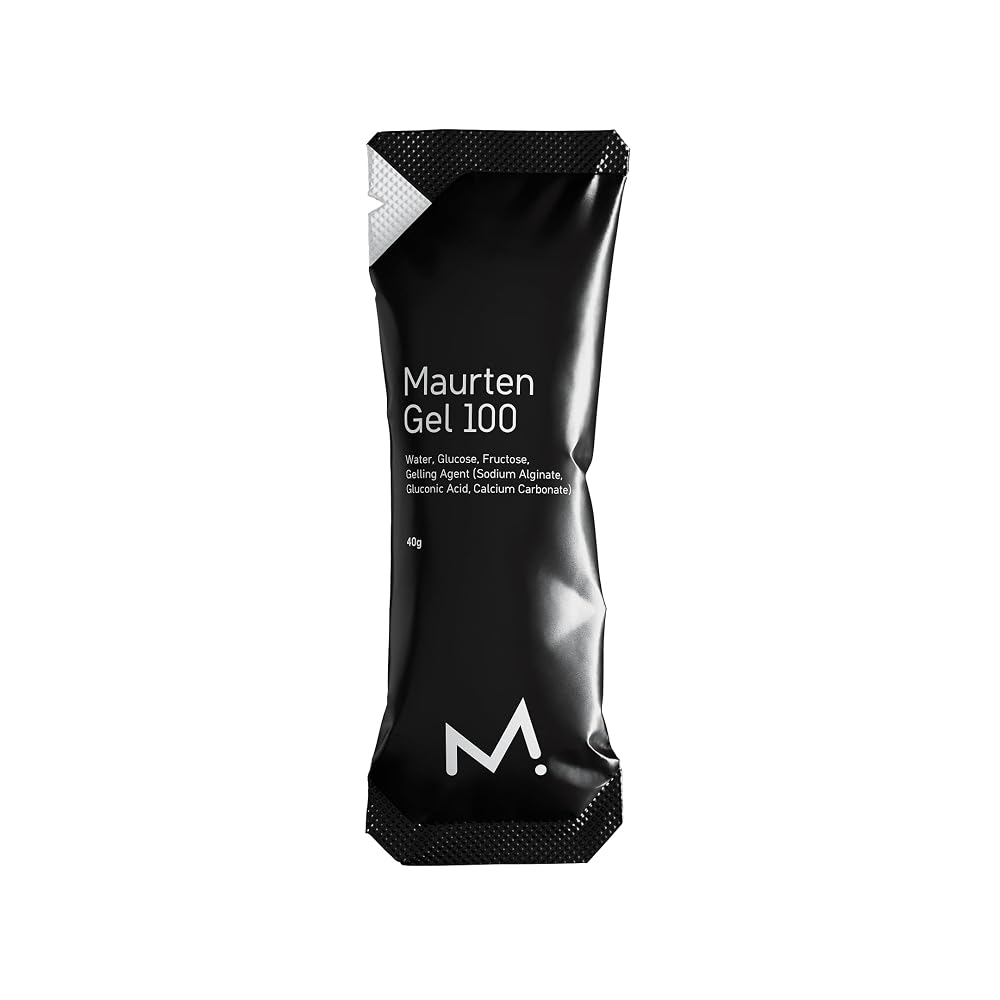
If you want to try one yourself, here’s Maurten Gel 100 on Amazon.
Now you can walk into a running store and find a whole wall of gels, chews, drink mixes and hydrogels. Most of it is a more engineered way of delivering carbohydrate than orange slices, and that’s fine.
What This Means for a Normal Marathoner
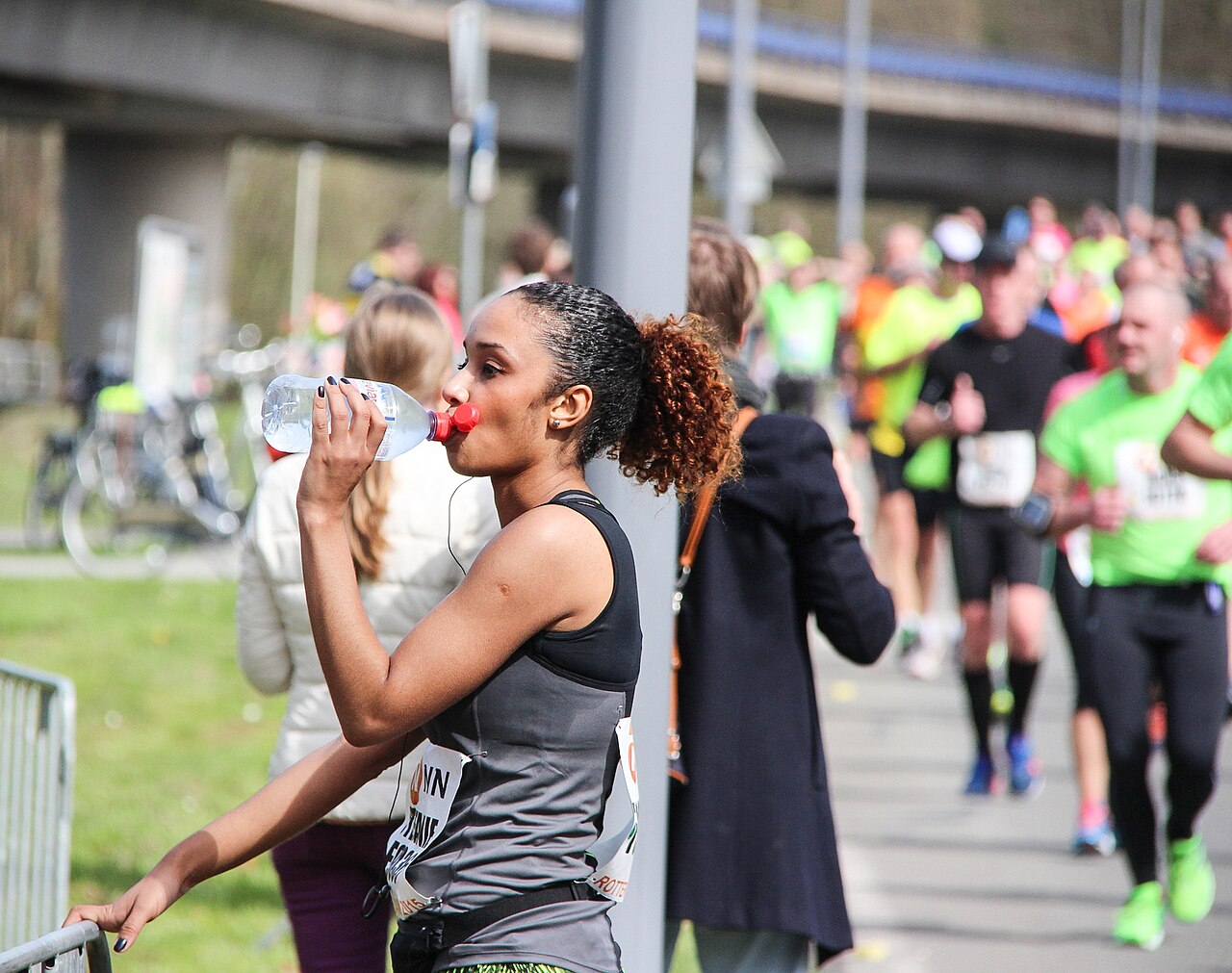
That’s a lot of history and chemistry, but what do you actually do at mile 12? Let’s turn it into numbers for a hypothetical runner: a 3:30 marathon, which works out to an 8:00 per mile pace. I picked it because it’s a common goal and the math is clean. If your goal is faster or slower, the numbers shift, and I’ll show how at the end.
Step 1: Pick an hourly target. There are really two tiers of guidance now:
- Standard intake: 60 to 90 grams of carbohydrate an hour. This is the classic recommendation for sustained energy and holding your pace. Above 60 grams an hour you need a glucose and fructose mix (usually 2:1), because of those two separate doorways in your gut.
- High-carb intake: 90 to 120 grams an hour. This is increasingly used by serious runners and cyclists who want to squeeze out more performance and spare their glycogen. It leans even harder on dual-source carbohydrate, and above 90 grams an hour the recommended mix moves toward something like 1:0.8 glucose to fructose, so the glucose doorway isn’t overloaded.
A caution on the high end. The evidence that 120 grams beats 90 is thin, and what exists comes mostly from cycling. In one study of elite trail runners, two of nine who took in that much carbohydrate had to quit a mountain marathon with stomach problems. The elite end of the sport keeps pushing these numbers higher, and some people will tolerate more than the guidance says, while others will tolerate less. The only way to find out which you are is to test it in training.
A 3:30 marathon is 3.5 hours, so it sits in the standard tier, and a runner at that pace is most likely to land on the lower end of it, closer to 60 grams an hour than 90. The high-carb numbers are probably best left to very experienced and very competitive runners who have spent a lot of training time working up to them. Here’s what the numbers look like at four levels, starting with a conservative one for people new to fueling:
| Target | Per hour | Total for 3:30 | Gels at 25 g each | One gel about every |
|---|---|---|---|---|
| Starting out | 45 g | about 158 g | about 6 | 33 minutes (4 miles) |
| Standard | 60 g | 210 g | about 8 | 25 minutes (3 miles) |
| Standard, upper end | 90 g | 315 g | about 13 | 17 minutes (2 miles) |
| High-carb | 120 g | 420 g | about 17 | 12 to 13 minutes (1.5 miles) |
The 25 grams comes from the Maurten Gel 100, which lists 25 grams of carbohydrate per packet. Plenty of other gels are in the same ballpark, but check the label on yours. The totals are just multiplication: 210 minutes is 3.5 hours, and 3.5 hours at 60 grams an hour is 210 grams.
Step 2: Turn it into a plan. At the standard level, 60 grams an hour, you’d take a 25-gram gel roughly every 25 minutes, which at an 8:00 pace is about every three miles. That means a gel at around miles 3, 6, 9, 12, 15, 18, 21 and 24, so eight gels and 200 grams. That averages out to a little under 60 grams an hour across the full 3.5 hours, and you can make up the difference with a few cups of sports drink at aid stations.
At the advanced level, 13 gels is a lot to carry in your shorts. One fix is bigger packets. The Maurten Gel 160 has 40 grams of carbohydrate in a 65 gram packet, so eight of them is 320 grams, about 90 grams an hour. The packet count is the same as the standard plan, but each one is bigger. At the high-carb level, 420 grams is more than 10 of those Gel 160 packets, so a good chunk of it would have to come from drink or chews instead. That’s also a lot of carbohydrate to take at once, which brings us to the next point.
Step 3: Count the drink, too. A sports drink in the 6 to 8 percent range works out to roughly 60 to 80 grams of carbohydrate per liter, so a half-liter bottle of a 6 percent drink is about 30 grams. That counts toward your total. If you’re drinking the course drink at every aid station, you may need fewer gels than the table says, so find out what your race serves (and how strong it is) before you plan. Count both, or you can end up with far more carbohydrate in your stomach than you planned, and a miserable last six miles.
Step 4: Practice the plan before race day. Your gut can adapt to taking in more carbohydrate, but it doesn’t happen overnight. Try your target on your long runs, and build up over several of them. If 60 grams an hour gives you stomach trouble, go back to 45 and try again, and don’t try a new gel on race morning.
How the numbers shift with your goal.
- A slower runner is out there longer. A 4:30 marathoner has 4.5 hours of running ahead of them, so at 60 grams an hour that’s 270 grams, or about 11 gels at 25 grams each. The hourly number matters less than the total.
- A faster runner is out there for less time. A 3:00 marathoner covers the distance in three hours, so even at 90 grams an hour the total is 270 grams. Pace and body size also affect how much fuel you burn, and I’m not a dietitian, so treat the table as a starting point.
- Fluids are a separate question. For fluids, drink to thirst. The “drink as much as you can” era had its own problems, which is a story for another post. If you’ve had trouble with fluids or your stomach on long runs, talk to a doctor.
If you’re shopping, Amazon has a wide range of energy gels and plenty of carb drink mixes, and the cheapest way to figure out which one your stomach likes is to buy a few small packs and try them on your long runs.
Thomas Hicks, for what it’s worth, did not have the option of a nice gel. He got an egg white.
Photo credits, all via Wikimedia Commons: the 1904 photos are public domain and attributed to Jessie Tarbox Beals. Rotterdam Marathon 2015 by Peter van der Sluijs (CC BY-SA 3.0).