The Great Supershoe Arms Race
10/23/26 • 9 minute read
The date was May 6, 2017. The Nintendo Switch had come out two months earlier and nobody could find one. The Fyre Festival had imploded the weekend before, and the internet was still busy enjoying it. And on a Formula One racetrack outside Monza, Italy, at 5:45 in the morning, three of the best marathoners in the world were about to try something that most people in the sport thought was flat-out impossible: run 26.2 miles in under two hours.
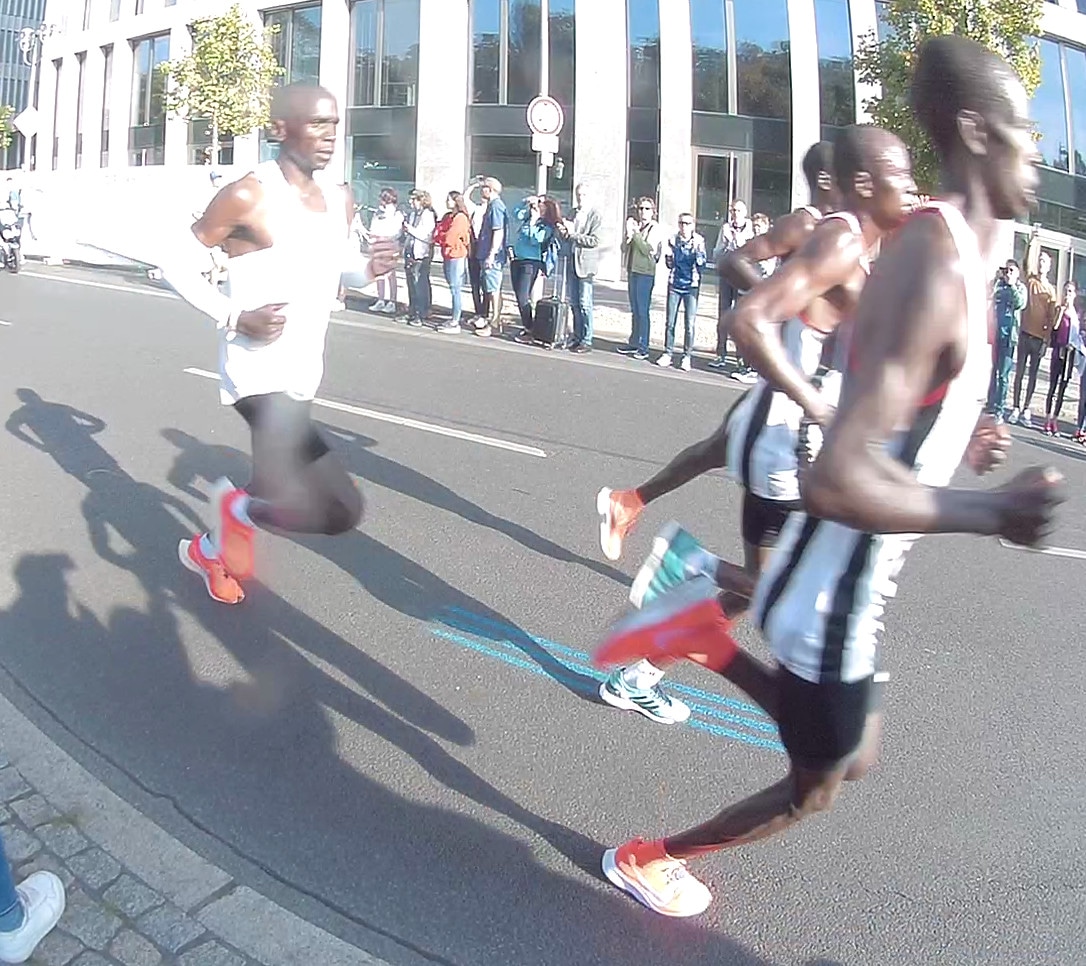
They didn’t do it. Eliud Kipchoge came the closest, finishing in 2:00:25, which still doesn’t count as a world record because of the rotating pacers, the pace car and the drinks delivered on bikes. But the thing everyone ended up talking about wasn’t the time. It was the shoes.
The Shoe That Wasn’t Supposed to Work
If you’ve read my post on the barefoot running hysteria of 2010, you know how the story went up to this point. Running shoes got bloated, minimalism got preachy, and then the pendulum swung to the other extreme with big, squishy shoes from brands like HOKA. By the mid-2010s, the question for most shoe companies was basically: how much foam can we put under a runner before it gets silly?
Nike‘s answer, it turned out, was to ask a different question. What if the foam wasn’t just soft, but bouncy? Every running shoe has some kind of foam in the midsole, and for decades that foam was EVA, a material that squishes when you land and then, well, mostly stays squished. The new stuff was a Pebax-based foam, which Nike called ZoomX. It was lighter than EVA and gave back much more of the energy you put into it.
Then they did something that had been tried before, but never really like this: they put a curved carbon fiber plate in the middle of it. The plate gave the shoe a stiff, rocker-like shape that rolled you forward off your toes, and the foam gave you a spring when you pushed off. Together the idea was that you’d get a little extra back on every single step. Over 26.2 miles, that’s about 40,000 steps.
Four Percent
Nike took a version of that shoe, the Vaporfly, and put it on sale in 2017 as the Zoom Vaporfly 4%. The “4%” wasn’t a typo or a marketing flourish. It came from a study out of the University of Colorado Boulder, in which 18 fast runners ran on treadmills in the Vaporfly prototype, the Nike Zoom Streak and the Adidas Adios Boost. The Vaporfly saved them an average of about 4% of the energy it took to run at a given pace, and every single runner in the study was better off in it.
Two things worth knowing about that study. The Adios Boost wasn’t a random choice: it’s the shoe Dennis Kimetto wore to set the marathon world record in 2014. And the study was funded by Nike, which doesn’t make it wrong, but is worth keeping in mind.
Also, a 4% improvement in running economy isn’t the same as being 4% faster, and a lot of people misread it. But think about what even a fraction of that means in a sport where elites chase seconds, and where a 2% improvement in a world record would have been a crazy outlier.
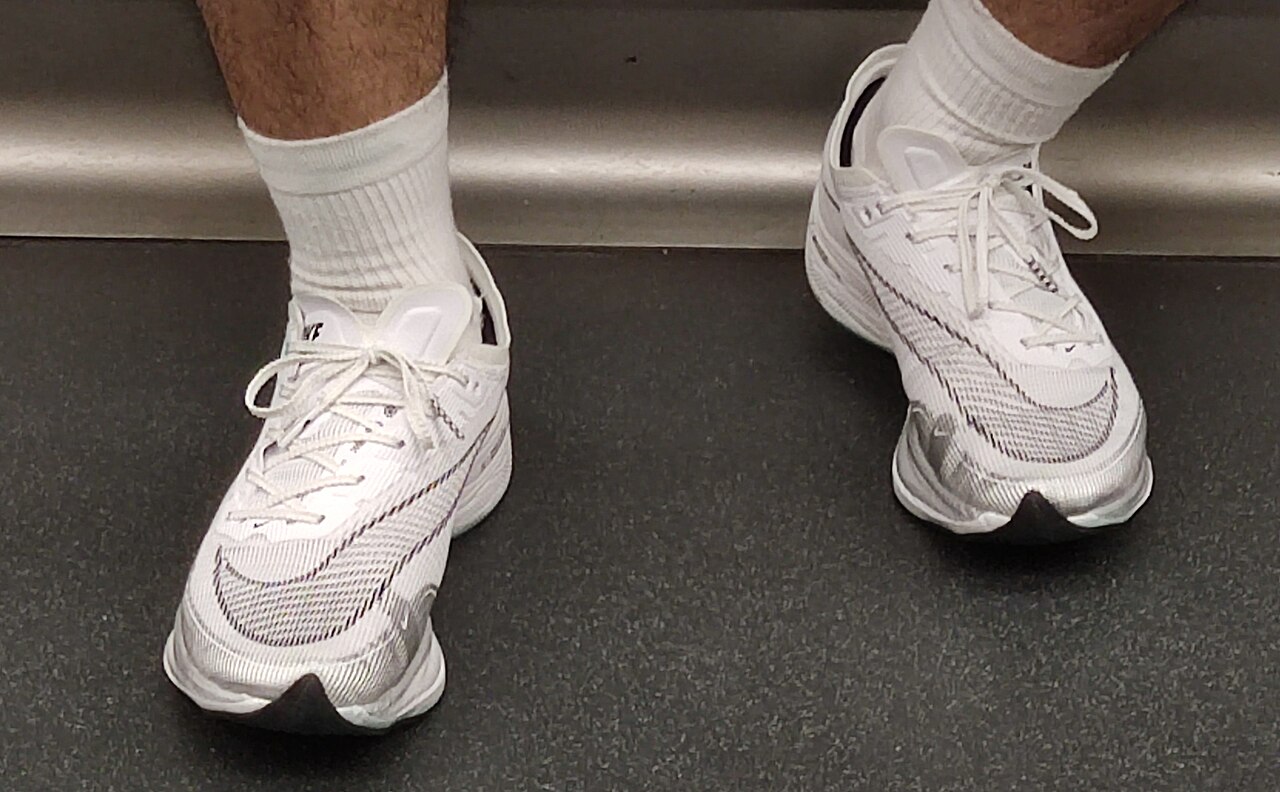
And then the results started coming in. Shalane Flanagan won the New York City Marathon that November, the first American woman to do it in 40 years. In September 2018, Kipchoge broke the world record in Berlin with a 2:01:39, taking more than a minute off the old mark. The New York Times then dug through hundreds of thousands of real race results and found that runners in Vaporflys were running something like 4% to 5% faster than runners in an average shoe. And not just the elites: recreational runners were suddenly chasing, and getting, personal bests. By the end of 2019, the five fastest record-eligible marathons in history had all been run in versions of the Vaporfly.
The Arms Race
You can guess what happened next. Every other shoe company looked at what Nike had and ran, not walked, back to their labs.
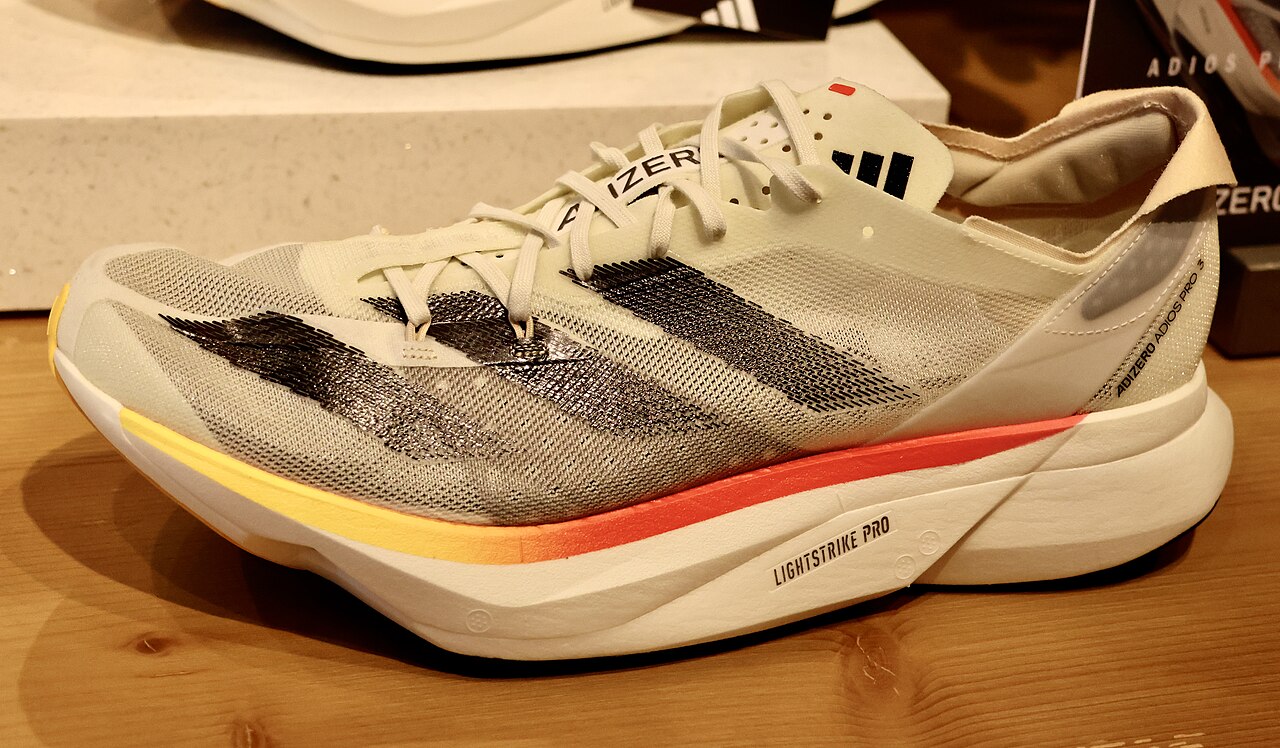
Within a couple of years, the market was full of carbon-plated shoes with fancy new foams. HOKA was first out of the gate with the Carbon X in early 2019. Saucony had the Endorphin Pro. Adidas came with the Adizero Adios Pro, using “Energy Rods” rather than a single plate. Brooks, New Balance, ASICS and just about everyone else showed up with their own versions, each with a different claim about why their foam, plate or geometry was better.
Meanwhile, Nike kept going. The Vaporfly Next% came along in 2019 and improved on the original, and then the Alphafly put in a pair of Air Zoom pods under the forefoot on top of everything else. In October 2019, Kipchoge put on a prototype of that shoe and ran 1:59:40 in Vienna, with a rotating team of pacers. The time wasn’t an official record, but he’d broken two hours. The very next day, Brigid Kosgei, also in Nike’s new shoes, knocked more than a minute off the women’s marathon world record in Chicago, a mark that had stood for 16 years.
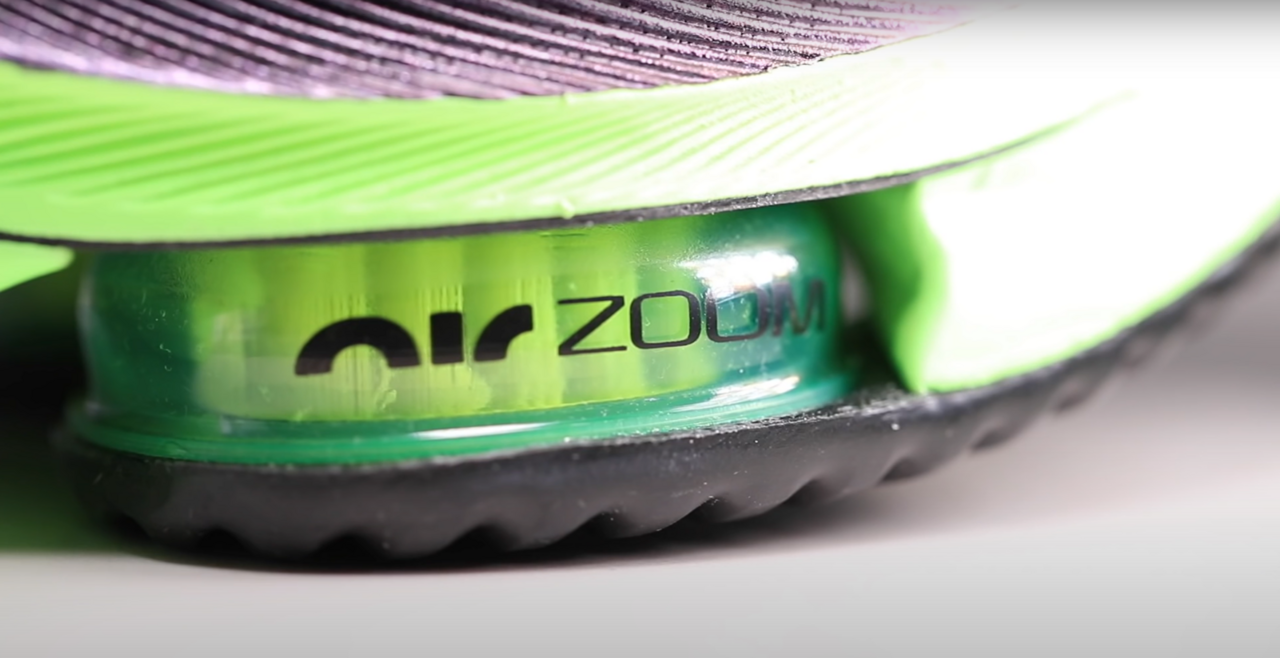
Somewhere along the way, people started calling them “supershoes.”
The Rule Book Catches Up
At this point a lot of people in the sport got nervous. If the shoe could make that much difference, was it still the athlete winning the race? Some started calling it technological doping. Others pointed out, reasonably, that running shoes have always changed, and that nobody was complaining about spiked track shoes.
On January 31, 2020, World Athletics stepped in with rules. Road racing shoes couldn’t have a sole thicker than 40mm. They could have only one rigid plate. And starting that spring, any shoe had to be available for purchase on the open market for four months before an athlete could race in it, so that a company couldn’t show up with a secret prototype that nobody else could buy.
The rules didn’t take the supershoes away. The Vaporfly and Next% were already legal, and the Alphafly came out that year with a stack height just under the limit. What the rules did do was draw a line that the industry has been building right up against ever since.
The Supershoe Today
Most of the major shoe companies now have a supershoe, or three. The foams have gotten softer and the plates more sophisticated, and Nike’s own Vaporfly 4 and Alphafly 4 are still the benchmark that a lot of the others get compared to. The HOKA Cielo X1 3.0, the Brooks Hyperion Elite 6 and the Saucony Endorphin Pro 5 are all worth a look too.
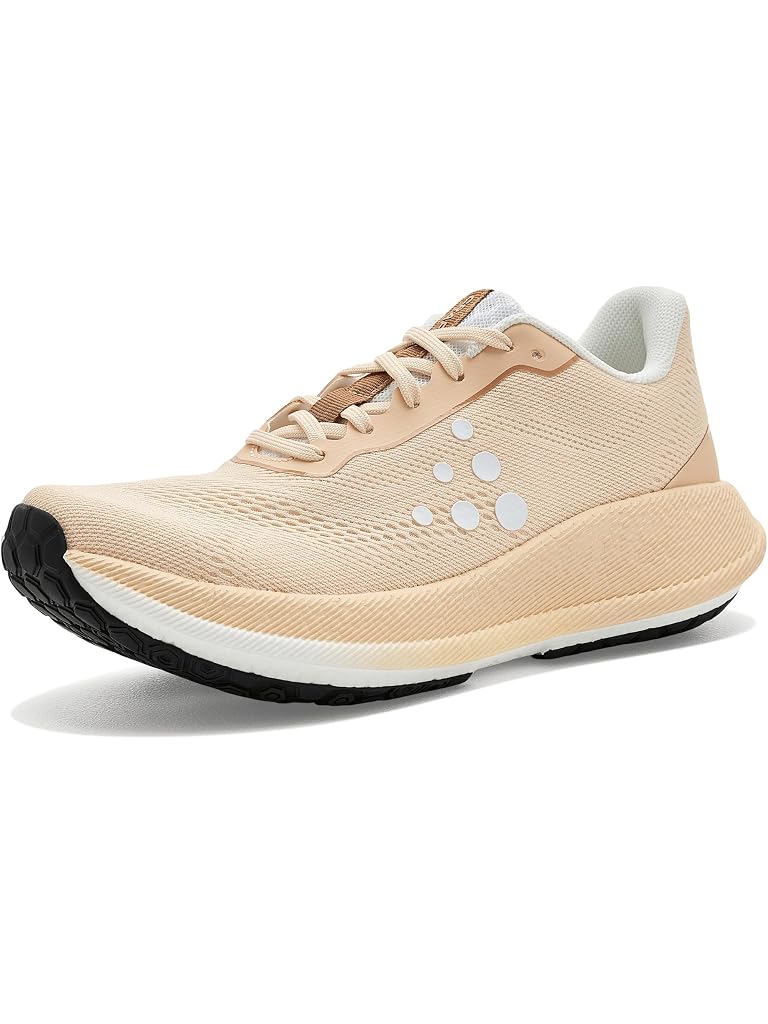
My personal favorite right now is the PUMA Fast-R Nitro Elite 3, which has earned its place among the big names. It’s one of the lightest supershoes out there, about 6.6 ounces, and it has a snappy, forefoot-friendly feel that I love for racing. It’s a little less forgiving than the cushier options, since reviewers regularly point out it’s not the most stable shoe on the market, and it’s not cheap at around $300. But when I want to go fast, it’s the one I’m reaching for.
Speaking of tradeoffs, supershoes in general have a few. They’re expensive, with prices that have crept toward $300. They don’t last nearly as long as a normal trainer, since the foam that makes them so springy also wears out quickly. And a lot of them are less stable than you’d think, which is no problem for a runner on a smooth road in a straight line, and a bit more of one on a wet corner.
But the real legacy is that the supershoe changed how everyone races. It’s no longer something only the elites use. If you toe the line at a marathon today, a significant chunk of the field around you is wearing one, and the times at the sharp end are faster than anyone thought they’d be a decade ago.
Barefoot running came and went, taking a few good ideas with it. The supershoe isn’t going anywhere. The next question is how much further they can go, and what the rule book will look like when they get there.
Photo credits: Eliud Kipchoge at the 2018 Berlin Marathon by C.Suthorn (CC BY-SA 4.0); Nike Vaporfly Next% by Hjfm 003 (CC BY-SA 4.0); Adizero Adios Pro 3 by Pangalau (CC BY-SA 4.0); Air Zoom pod in the Nike Alphafly Next% by Seth James DeMoor (CC BY-SA 3.0); all via Wikimedia Commons.